INTERNATIONAL CHESS DAY
INTERNATIONAL CHESS DAY
July 20, 2016
The International Chess Day is celebrated all over the world every year on July 20. The day was founded by the International Chess Federation (FIDE) on July 20, 1924.It was proposed by UNESCO.
Chess originated in northern India in the 6th century AD. Initially it was known as Chaturanga, which means four divisions (of the military) infantry, cavalry, elephantry and chariotry which represented by the pieces that would have developed into the modern PAWN, KNIGHT, BISHOP and ROOK respectively. Chess was primarily used as a tool for military strategy, mathematics, gambling and even astronomy in India and other parts of the world.
From India chaturanga spread to Persia and they called it as chatrang. When the Arabs conquered Persia, the Muslim world named it as shatranj. Around tenth century it entered Europe.
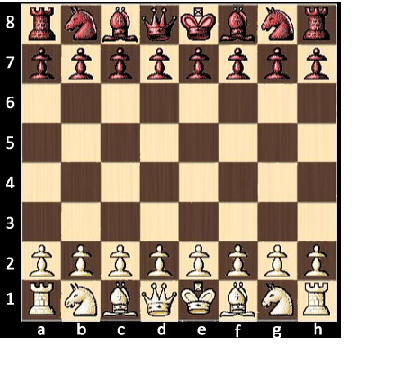
Chess is a two-player board game played on a Chess Board contains 64 squares arranged in an eight-by-eight (8 x 8) grid. It is played by two players with 32 pieces i.e. each player plays the game with 16 pieces; one king, one queen, two rooks, two knights, two bishops and eight pawns. 16 white and 16 black pieces are placed on the board. The goal of the game is to ‘checkmate’ the opponent’s king with inevitable capture.
The basic moves of chess:
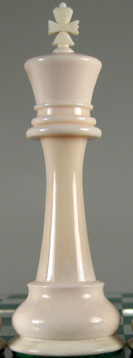 The king moves exactly one square horizontally, vertically, or diagonally. A special move with the king known as castling is allowed only once per player, per game.
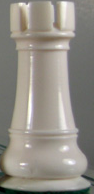
 A rook moves any number of vacant squares in a horizontal or vertical direction. It also is moved when castling.
 A bishop moves any number of vacant squares in any diagonal direction.
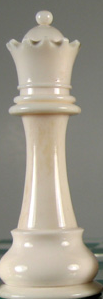 The queen moves any number of vacant squares in a horizontal, vertical, or diagonal direction.
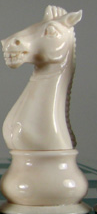
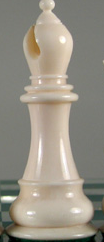 The knight move is unusual among chess pieces. When it moves, it can move to a square that is two squares horizontally and one square vertically, or two squares vertically and one square horizontally. The complete move therefore looks like the letter L. Unlike all other standard chess pieces, the knight can ‘jump over’ all other pieces (of either color) to its destination square.
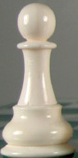
Pawns have the most complex rules of movement: A pawn moves straight forward one square, if that square is vacant. If it has not yet moved, a pawn also has the option of moving two squares straight forward, provided both squares are vacant. Pawns cannot move backwards. Pawns are the only pieces that capture differently from how they move. A pawn can capture an enemy piece on either of the two squares diagonally in front of the pawn (but cannot move to those squares if they are vacant).
Material source: www.en.wikipedia.org
Image credit: www.playchesseasy.com/www.thechesspiece.com
